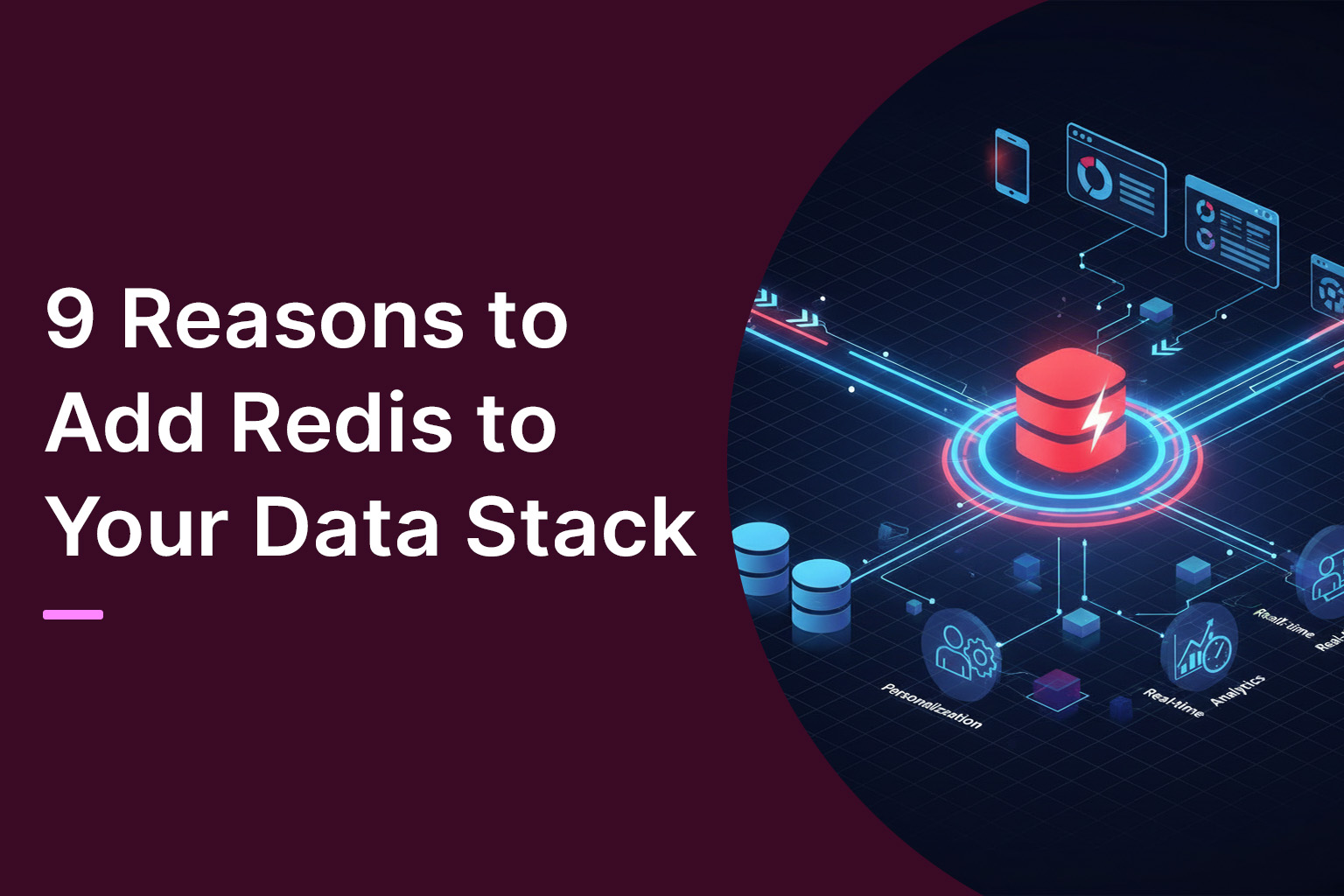
Every modern application is judged by how fast it responds. Users expect pages to load instantly, APIs to return results in milliseconds, and systems to stay responsive even during traffic spikes. For many teams, traditional databases alone struggle to meet these expectations. This is exactly where Redis earns its place.
Redis is not a replacement for your primary database. Instead, it acts as a performance layer that sits alongside it, handling high-speed data access and real-time workloads. Understanding why use Redis and why add Redis to your data stack helps organizations build systems that scale smoothly without compromising speed or reliability.
Let’s break down the most practical reasons Redis has become a core component in modern architectures.
1. Blazing-Fast Performance with In-Memory Storage
The most obvious Redis advantage is speed. Redis is an in-memory data store, which means data is served directly from RAM instead of disk. This results in response times measured in microseconds rather than milliseconds.
For applications handling frequent reads-such as dashboards, product catalogs, or user profiles-this speed difference is immediately noticeable. Teams often see dramatic reductions in latency simply by offloading read-heavy workloads to Redis.
2. Reduces Load on Primary Databases
Adding Redis to your data stack helps protect your core databases from unnecessary strain. Instead of hitting a relational or NoSQL database for every request, Redis caches frequently accessed data and serves it instantly.
This approach improves overall system stability. During peak traffic events, Redis absorbs the surge while the primary database continues operating smoothly. Many high-traffic platforms rely on this pattern to avoid downtime during promotions or seasonal spikes.
3. Built for Real-Time Use Cases
Redis excels in scenarios where data changes rapidly and must be accessed instantly. This is one of the most compelling Redis use cases.
Examples include real-time analytics dashboards, live leaderboards, rate-limiting systems, and chat applications. Because Redis supports atomic operations and pub/sub messaging, it enables real-time updates without complex infrastructure.
In modern applications, where real-time responsiveness is often a requirement rather than a luxury, Redis becomes difficult to ignore.
4. Flexible Data Structures Beyond Key-Value
Unlike many caching solutions, the Redis database supports a wide range of data structures. These include strings, hashes, lists, sets, sorted sets, streams, and more.
This flexibility allows developers to model data efficiently based on access patterns. For example, sorted sets are ideal for ranking systems, while hashes work well for storing user session data. These built-in capabilities reduce the need for additional processing layers in your application.
5. High Availability and Scalability
Redis is designed to scale. With features like replication, clustering, and automatic failover, it supports high-availability architectures that can grow alongside your business.
In distributed systems, Redis clusters allow data to be partitioned across nodes, ensuring performance remains consistent even as datasets expand. This makes Redis suitable for enterprise-grade deployments handling millions of operations per second.
6. Ideal for Modern Application Architectures
When discussing Redis in modern applications, it’s impossible to ignore its role in microservices and cloud-native environments. Redis integrates seamlessly with containerized deployments, orchestration platforms, and cloud services.
Microservices often require shared state for sessions, feature flags, or rate limits. Redis provides a lightweight, centralized solution without introducing tight coupling between services.
This adaptability explains why Redis is frequently included in modern reference architectures.
7. Improves User Experience at Scale
Performance directly affects user satisfaction. Slow responses lead to abandoned sessions, lower engagement, and lost revenue. Redis helps eliminate these bottlenecks.
By caching personalized content, session data, and frequently accessed resources, applications remain responsive even as user counts grow. This is one of the most tangible Redis benefits, especially for customer-facing platforms where speed translates into trust.
8. Cost-Effective Performance Optimization
Scaling databases vertically or adding replicas can be expensive. Redis offers a more efficient alternative by handling high-volume access patterns without requiring heavy database upgrades.
Because Redis reduces database load and improves throughput, organizations often find it more cost-effective to add Redis than to scale their primary data stores aggressively. This makes Redis a strategic investment rather than just a technical enhancement.
9. Mature Ecosystem and Proven Reliability
Redis has been around long enough to prove its reliability in production. It is used by companies across industries, from startups to global enterprises.
The ecosystem includes strong client libraries, monitoring tools, and cloud-managed options that simplify operations. Combined with its extensive documentation and community support, Redis is a low-risk addition to any data stack.
Redis vs Traditional Approaches: A Quick Perspective
Traditional databases are excellent for transactional consistency and long-term storage. However, they are not optimized for ultra-low-latency access at scale. Redis complements these systems by focusing on speed and concurrency.
Instead of asking whether Redis replaces your database, the better question is how Redis enhances it. This perspective shift helps teams design more resilient architectures.
When Redis Makes the Most Sense
Redis is particularly valuable when applications require:
- High read and write throughput
- Real-time data processing
- Shared state across services
- Low-latency responses under heavy load
In such cases, Redis becomes an essential layer rather than an optional optimization.
Final Thoughts: Turning Redis into a Long-Term Advantage
Understanding what are the benefits of Redis goes beyond performance metrics. Redis enables architectural flexibility, improves system resilience, and enhances user experience—all without introducing unnecessary complexity.
However, maximizing these benefits requires proper configuration, monitoring, and scaling strategies. This is where Redis consulting services and Redis support services add significant value. Expert guidance ensures Redis is implemented securely, optimized for workloads, and aligned with business goals.
For organizations looking to scale confidently and build high-performance systems, investing in Redis consulting & support Services is often the final step in turning Redis from a powerful tool into a strategic advantage.
About the Author







1 thought on “9 Reasons to Add Redis to Your Data Stack”