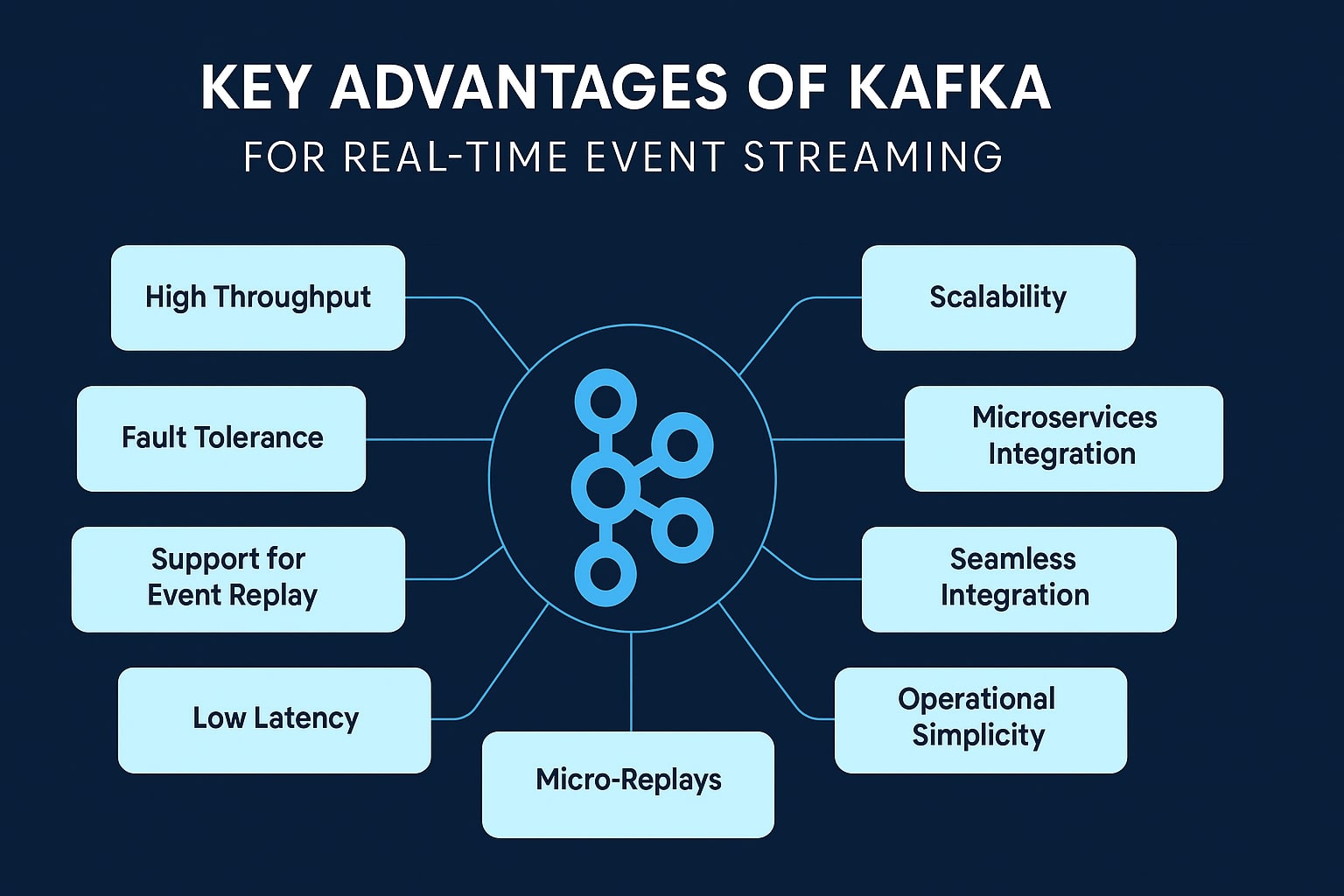
Real-time data has shifted from being a competitive advantage to a business necessity. Whether it’s tracking user activity, processing transactions, or monitoring systems, organizations now expect data to move instantly and reliably. This is where Apache Kafka stands out. More than just a messaging tool, Kafka has evolved into a robust platform for handling large-scale, real-time event streaming across industries.
This guide goes deeper, focusing on why to use Apache Kafka for real-time streaming and how it supports modern, data-driven architectures.
Understanding Kafka’s Role in Real-Time Streaming
Apache Kafka was designed to solve a problem many organizations faced as they scaled: traditional messaging systems struggled with volume, speed, and reliability. Kafka introduced a distributed, log-based approach that treats events as durable, replayable records.
As a Kafka distributed streaming system, it enables producers to publish events and consumers to process them independently, without tightly coupled dependencies. This decoupling is one of the core reasons Kafka works so well in complex environments.
1. High Throughput Without Compromising Performance
One of the most widely cited Apache Kafka advantages is its ability to handle massive volumes of data with minimal latency.
Kafka achieves this by:
- Writing data sequentially to disk
- Using batching and compression
- Avoiding unnecessary message overhead
For example, an e-commerce platform tracking clicks, searches, and purchases can process millions of events per second without slowing down customer-facing applications. This makes Kafka ideal for real-time data streaming with Kafka in high-traffic systems.
2. Fault Tolerance and Data Durability
In real-time systems, data loss is not an option. Kafka addresses this through replication and distributed storage.
Key benefits include:
- Automatic replication of events across brokers
- Leader-follower architecture for failover
- Persistent storage that allows data replay
If a consumer application goes offline, it can resume processing from where it left off. This reliability is a major reason Kafka is trusted for financial transactions, monitoring platforms, and operational analytics.
3. True Scalability for Growing Data Needs
Kafka is built to scale horizontally. Adding more brokers increases capacity without requiring architectural changes.
This scalability supports:
- Growing event volumes
- New data producers and consumers
- Geographic distribution
Organizations moving through legacy system modernization often use Kafka as a bridge between old systems and modern platforms. Instead of replacing everything at once, Kafka enables gradual migration while keeping data flowing smoothly.
4. Strong Fit for Microservices Integration
Modern applications are rarely monolithic. They rely on loosely coupled services that need to communicate efficiently.
Kafka plays a central role in microservices integration by acting as an event backbone. Services publish events without knowing who will consume them, which reduces dependencies and improves system resilience.
For instance, when an order is placed, one event can trigger inventory updates, notifications, analytics, and billing without direct service-to-service calls.
5. Support for Event Replay and Auditing
Unlike traditional queues, Kafka stores events for a configurable retention period. This allows teams to:
- Reprocess historical data
- Debug system behavior
- Build new consumers without impacting producers.
This capability is especially valuable in distributed systems development, where understanding system behavior over time is critical for troubleshooting and optimization.
6. Seamless Integration with Modern Data Ecosystems
Kafka integrates easily with databases, cloud platforms, and analytics tools through connectors and stream-processing frameworks.
This makes it a natural fit for:
- Cloud-native application development
- Data lakes and warehouses
- Real-time dashboards and alerts
Organizations often use Kafka to stream data into analytics platforms, enabling faster insights without batch delays.
7. Low Latency for Time-Sensitive Use Cases
Latency matters in use cases like fraud detection, system monitoring, and recommendation engines. Kafka’s architecture ensures messages are delivered quickly and consistently.
Compared to traditional messaging systems that focus on guaranteed delivery at the cost of speed, Kafka balances both-making it suitable for time-sensitive workloads.
8. Operational Simplicity at Scale
While Kafka is powerful, it’s also designed to run efficiently at scale when implemented correctly. Modern tooling, monitoring, and managed services have reduced operational complexity significantly.
Many organizations now adopt Kafka as a core platform rather than a point solution, using it across multiple teams and applications.
9. Real-World Use Case Insight
A logistics company processing shipment updates across regions used Kafka to unify event streams from GPS devices, warehouse systems, and customer portals. By centralizing events, they reduced processing delays and gained real-time visibility into shipment status—something their previous batch-based system couldn’t support.
This example highlights the key advantages of Kafka for real-time event streaming in operational environments where timing and accuracy are critical.
Conclusion: Why Kafka Remains the Standard for Event Streaming
Apache Kafka continues to be the backbone of modern event-driven systems. Its scalability, reliability, and flexibility explain the long-term benefits of Apache Kafka across industries.
Whether you’re building real-time analytics pipelines, modernizing legacy infrastructure, or supporting microservices architectures, Kafka provides a proven foundation. Organizations looking to implement or optimize Kafka often turn to Apache Kafka Development Services to ensure the platform is configured for performance, resilience, and long-term growth.
Understanding why to use Apache Kafka for real-time streaming ultimately comes down to this: it delivers consistent, real-time data flow at scale-without sacrificing reliability or flexibility.
About the Author







1 thought on “Key Advantages of Kafka for Real-Time Event Streaming”